The following list is my Top 100 Films of All-Time. I started this list when I was about 12 and I've kept updating it for the past 14 years or so. It's meaning has changed a bit with each incarnation. Right now, it's an interesting blend of films that I feel are the greatest, in a more objective way, and films that are personal favorites of mine, more subjectively. Enjoy!
AlexanderKhan's TOP 100 FILMS
1. Apocalypse Now (1979, F. Coppola)
2. Lawrence of Arabia (1962, D. Lean)
3. The Thin Red Line (1998, T. Malick)
4. 8 ½ (1963, F. Fellini)
5. 2001: A Space Odyssey (1968, S. Kubrick)
6. Mulholland Dr. (2001, D. Lynch)
7. Raging Bull (1980, M. Scorsese)
8. The Godfather Part II (1974, F. Coppola)
9. Heat (1995, M. Mann)
10. Alien (1979, R. Scott)
11. Lost in Translation (2003, S. Coppola)
12. Amadeus (1984, M. Forman)
13. The Empire Strikes Back (1980, I. Kershner)
14. The Insider (1999, M. Mann)
15. Goodfellas (1990, M. Scorsese)
16. Blade Runner [Final Cut] (1982, R. Scott)
17. Once Upon A Time in the West (1968, S. Leone)
18. The Assassination of Jesse James by the Coward Robert Ford (2007, A. Dominik)
19. Seven Samurai (1954, A. Kurosawa)
20. The Lord of the Rings: The Return of the King (2003, P. Jackson)
21. Malcolm X (1992, S. Lee)
22. The Shawshank Redemption (1994, F. Darabont)
23. Crouching Tiger, Hidden Dragon (2000, A. Lee)
24. Magnolia (1999, P.T. Anderson)
25. There Will Be Blood (2007, P.T. Anderson)
26. The Silence of the Lambs (1991, J. Demme)
27. City of God (2002, F. Meirelles)
28. The Godfather (1972, F. Coppola)
29. Network (1976, S. Lumet)
30. The New World (2005, T. Malick)
31. Dances With Wolves (1990, K. Costner)
32. The Nightmare Before Christmas (1993, H. Selick)
33. Vertigo (1958, A. Hitchcock)
34. Aliens (1986, J. Cameron)
35. La Dolce Vita (1960, F. Fellini)
36. Ali (2001, M. Mann)
37. Field of Dreams (1989, P.A. Robinson)
38. The Lord of the Rings: Fellowship of the Ring (2001, P. Jackson)
39. Das Boot (1981, W. Petersen)
40. Fargo (1996, J. Coen)
41. The Aviator (2004, M. Scorsese)
42. Harry Potter and the Prisoner of Azkaban (2004, A. Cuaron)
43. The Big Lebowski (1998, J. Coen)
44. Persona (1966, I. Bergman)
45. Mr. Smith Goes to Washington (1939, F. Capra)
46. Kingdom of Heaven [Director’s Cut] (2005, R. Scott)
47. In The Bedroom (2001, T. Field)
48. The Graduate (1967, M. Nichols)
49. Schindler’s List (1993, S. Spielberg)
50. Star Wars (1977, G. Lucas)
51. Bringing Up Baby (1938, H. Hawks)
52. Pulp Fiction (1994, Q. Tarantino)
53. Apollo 13 (1995, R. Howard)
54. Taxi Driver (1976, M. Scorsese)
55. The Lives of Others (2006, F.H. von Donnersmark)
56. 25th Hour (2002, S. Lee)
57. The Constant Gardener (2005, F. Meirelles)
58. Shaun of the Dead (2004, E. Wright)
59. Stranger Than Fiction (2006, M. Forster)
60. Blue Velvet (1986, D. Lynch)
61. Adventureland (2009, G. Mattola)
62. Cache (2005, M. Haneke)
63. Wild Strawberries (1957, I. Bergman)
64. Donnie Darko (2001, R. Kelly)
65. (500) Days of Summer (2009, M. Webb)
66. Synecdoche, New York (2008, C. Kaufman)
67. Pan’s Labyrinth (2006, G. del Toro)
68. Sling Blade (1996, B. Thornton)
69. The Prestige (2006, C. Nolan)
70. Days of Heaven (1978, T. Malick)
71. The Road (2009, J. Hillcoat)
72. Requiem For A Dream (2000, D. Aronofsky)
73. Gattaca (1997, A. Niccol)
74. WALL-E (2008, A. Stanton)
75. I’m Not There. (2007, T. Haynes)
76. Inland Empire (2006, D. Lynch)
77. 21 Grams (2003, A.G. Inarritu)
78. In Bruges (2008, M. McDonagh)
79. Lenny (1974, B. Fosse)
80. Moon (2009, D. Jones)
81. Coraline (2009, H. Selick)
82. The Fountain (2006, D. Aronofsky)
83. The Reader (2008, S. Daldry)
84. Brokeback Mountain (2005, A. Lee)
85. Traffic (2000, S. Soderbergh)
86. Moulin Rouge! (2001, B. Luhrmann)
87. Die Hard (1988, J. McTiernan)
88. Dazed and Confused (1993, R. Linklater)
89. Trainspotting (1996, D. Boyle)
90. Rear Window (1954, A. Hitchcock)
91. The Virgin Suicides (1999, S. Coppola)
92. Dogville (2003, L. von Trier)
93. The Matrix (1999, A. Wachowski/L. Wachowski)
94. Twelve Monkeys (1995, T. Gilliam)
95. The Diving Bell and the Butterfly (2007, J. Schnabel)
96. On The Waterfront (1954, E. Kazan)
97. Fight Club (1999, D. Fincher)
98. Chinatown (1974, R. Polanski)
99. American Beauty (1999, S. Mendes)
100. The 400 Blows (1959, F. Truffaut)
Showing posts with label Star Wars. Show all posts
Showing posts with label Star Wars. Show all posts
Tuesday, January 4, 2011


Wednesday, June 23, 2010
Busted: The Failure of the 2010 Summer Blockbuster
 Thirty-five years ago, a film was released that ushered in a new era in Hollywood and forever changed the way movies were marketed to the public. The film, directed by newcomer Steven Spielberg, was called Jaws and it invented the “Summer Blockbuster”. It wasn’t long before George Lucas followed in his friend’s footsteps and released Star Wars, proving the concept was here to stay.
In the subsequent years Hollywood perfected the idea, often advertising the big summer releases 6 months in advance during the Super Bowl. Summer Blockbusters have the actors with household names, they have the biggest production budgets, the best special effects, and they’re adapted from the most popular books. At this point, 35 years into the game, it’s a tried and true formula that almost never fails to turn big profits for the industry. That is… until this year.
Sex and the City 2 took in $26 million less than its predecessor during its opening week. Comedies like Killers and Get Him to the Greek debuted with only $16 million and $18
 million respectively, far less than similar films in recent summer seasons. Shrek Forever After, the forth film in the incredibly successful Shrek series, is pulling in the worst numbers of its franchise. Ridley Scott’s Robin Hood just barely cracked $100 million domestically, though it did much better overseas. It’s the same story with Prince of Persia. So far only Iron Man 2 has proven to be really successful, making more than the first installment did in 2008.
The 2010 summer season has studios scratching their heads as film after film expected to make a big splash has disappointed at the box office. But the explanation should actually be quite obvious. Hollywood’s own past success has crippled its creativity, and the lack of ideas is becoming all too noticeable. Exhibit A, The Sequels: Iron Man 2, Sex and the City 2, Nanny McPhee 2, Twilight 3, Toy Story 3, Step Up 3, and Shrek 4. Exhibit B, The Adaptations, Remakes, and Spin-offs: Prince of Persia, MacGruber, The A-Team, Jonah Hex, The Karate Kid, The Last Airbender, Robin Hood, and Get Him to the Greek. S
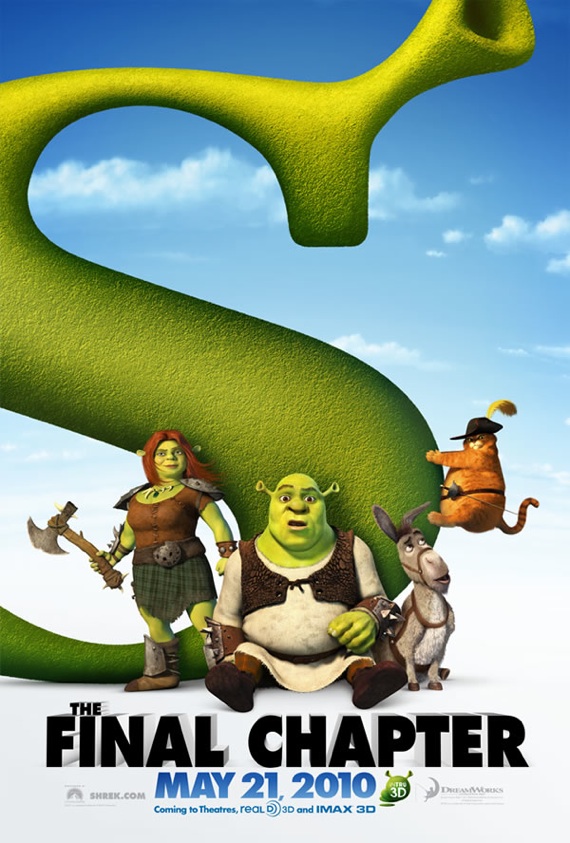 tarting to get the picture? The vast majority of the big films being pushed this season are either rehashed ideas or sequels made in an attempt to cash in a second (or fourth) time on the strength of previous success. It’s lazy, and it seems as though the public has finally caught on.
The thing that’s easy to forget about the original Summer Blockbusters like Jaws and Star Wars is that they were simply really good stories that focused on character development and had well written scripts. They just so happened to be told in a big, flashy way and marketed on lunch boxes, but the core values of quality film making were never left out at the expense of a cool special effect. Jaws, Star Wars, along with many other big summer films that followed, were successful because they connected with people on a human level. Story first, spectacle second. Ultimately, whether they know it or not, audiences crave this type of personal connection, and this summer Hollywood isn’t providing it; instead insulting the audience by assuming that any old sequel will sell.
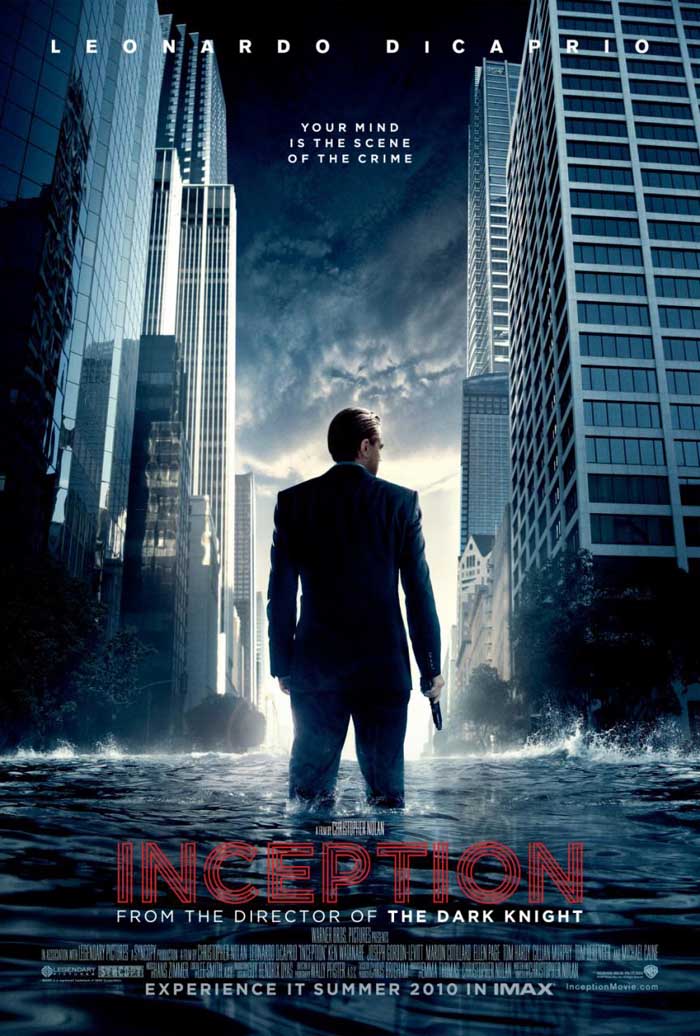
However, even after the darkest night, the sun will eventually rise. Inception, directed by Christopher Nolan, fresh from The Dark Knight, and starring Leonardo DiCaprio, is due out July 16, and it looks to be just the kind of interesting, thought provoking, personal film that could salvage the summer movie season. Hopefully audiences go see it in droves, sending a message to Hollywood that it takes more than slapping a “2” at the end of a title to guarantee a hit.
Sunday, March 28, 2010
Sci-Fi at the Oscars
Most movies fall into only a handful of major genres. Drama, Comedy, Action/Adventure, Musical, Fantasy and of course… Science Fiction. You might think that since there are only a few basic categories that at one point or another a film from each major genre would have earned Best Picture at the Academy Awards. But not so. No Sci-Fi film has ever won the top prize, and in the entire history of the Oscars only a few have even been nominated for Best Picture.

Before this year, the only Sci-Fi films ever to be nominated for Best Picture were A Clockwork Orange (1971), Star Wars (1977), and E.T. The Extra-Terrestrial (1982). That’s it. Three films since the annual ceremony began in 1927.
Then, in 2009, two Sci-Fi films were nominated among the expanded field of ten films, nearly matching the entire history of the Oscars in a single year. Those films were District 9 and Avatar.

Before this year, the only Sci-Fi films ever to be nominated for Best Picture were A Clockwork Orange (1971), Star Wars (1977), and E.T. The Extra-Terrestrial (1982). That’s it. Three films since the annual ceremony began in 1927.
Then, in 2009, two Sci-Fi films were nominated among the expanded field of ten films, nearly matching the entire history of the Oscars in a single year. Those films were District 9 and Avatar.
District 9 was a relatively low budget film, set in South Africa, and it told the story of aliens being forced to live in a prison camp. It was a political film that echoed the real life struggle of the black population under apartheid in South Africa.  Avatar was a massive three hour epic that pioneered a new type of motion-capture digital animation in 3D about a soldier who infiltrates an alien tribe using “avatar” technology. A human gets strapped into a machine and their consciousness is linked to a new body genetically engineered to look like those of the aliens. It went on to make more money than any other film in history, proving the box office viability of the Sci-Fi genre.
There were also other great Sci-Fi films in 2009. Star Trek, the re-booted story of the classic original characters, got the famous franchise that began in the ‘60s back into the mainstream. It got back to the roots of the original series, combining drama, humor, and adventure. There was also a very low budget film called Moon, starring Sam Rockwell who turned in perhaps the best performance of the entire year, about an astronaut on a three year solo mission on the surface of the moon. Science Fiction has a unique ability to make political points and comment on our culture by showing us other worlds, species, and time periods. Sometimes in order to learn about ourselves we need to put the story into a context that isn’t quite so familiar. Star Trek shows a future in which humanity has cured disease, stopped wars among countries, and united as a planetary race to explore the universe after it is discovered Earth isn’t the only home for life out there. District 9 exposes the ugliness of prejudice and racism by showing how fear leads people to subjugate those they don’t understand. Both Moon and Avatar make statements about corporate greed and the willingness to sacrifice lives and natural wonders for the sake of making money.
Science Fiction films have always played an important role in our popular culture, but have never quite gotten the respect they often deserve from the critics. They are never taken quite as seriously as they should, perhaps because of their subject matter. The very thing that allows them to be great can also make them appear silly on a surface level. But hopefully, 2009 was the beginning of a resurgence in the Science Fiction genre, and one day soon a Sci-Fi film will actually take home the Oscar for Best Picture.
Avatar was a massive three hour epic that pioneered a new type of motion-capture digital animation in 3D about a soldier who infiltrates an alien tribe using “avatar” technology. A human gets strapped into a machine and their consciousness is linked to a new body genetically engineered to look like those of the aliens. It went on to make more money than any other film in history, proving the box office viability of the Sci-Fi genre.There were also other great Sci-Fi films in 2009. Star Trek, the re-booted story of the classic original characters, got the famous franchise that began in the ‘60s back into the mainstream. It got back to the roots of the original series, combining drama, humor, and adventure. There was also a very low budget film called Moon, starring Sam Rockwell who turned in perhaps the best performance of the entire year, about an astronaut on a three year solo mission on the surface of the moon.
Science Fiction has a unique ability to make political points and comment on our culture by showing us other worlds, species, and time periods. Sometimes in order to learn about ourselves we need to put the story into a context that isn’t quite so familiar. Star Trek shows a future in which humanity has cured disease, stopped wars among countries, and united as a planetary race to explore the universe after it is discovered Earth isn’t the only home for life out there. District 9 exposes the ugliness of prejudice and racism by showing how fear leads people to subjugate those they don’t understand. Both Moon and Avatar make statements about corporate greed and the willingness to sacrifice lives and natural wonders for the sake of making money.Science Fiction films have always played an important role in our popular culture, but have never quite gotten the respect they often deserve from the critics. They are never taken quite as seriously as they should, perhaps because of their subject matter. The very thing that allows them to be great can also make them appear silly on a surface level. But hopefully, 2009 was the beginning of a resurgence in the Science Fiction genre, and one day soon a Sci-Fi film will actually take home the Oscar for Best Picture.
Thursday, August 20, 2009
Avatar: Perfecting the Art of Hype
Today, August 20, James Cameron released the teaser trailer for his new film Avatar, and unless you've been living under a rock for the past 5 years, you've probably heard something about this film already. If you haven't, you will soon, and this is no accident. Cameron, who has not made a feature film since Titanic (1997), has perfected the art of how to build hype around his projects before their release.
 Titanic, 12 years after its release, is still the most financially successful film ever made, and considering the inflation of ticket prices since '97 this is most impressive. To put it in perspective, the most successful film worldwide since Titanic is Lord of the Rings: The Return of the King (2003), and in order to match Titanic's $1.8 billion gross it would have needed to make an additional $700 million. That's the entire amount the hugely successful film Transformers made worldwide in 2007.

Controversy is one of hype's closest allies, and to no surprise Avatar has had some. There was a bit of a dispute between studios over the rights to the name "Avatar." M. Night Shyamalan directed an adaptation of the animated TV series Avatar: The Last Airbender, but when they attempted to register the name "Avatar" with the MPAA they discovered Cameron had beaten them to the punch. Shyamalan's film was renamed The Last Airbender and it's due out Summer 2010.
 The biggest piece of hype, however, is the film itself. Cameron is a master at making his films a can't miss event. Tomorrow, August 21, is officially "Avatar Day." The trailer released today on Apple.com will be released in theaters around the world, along with special limited screenings of a 15 minute preview, and the unveiling of the video game and toys to coincide with the film. If all goes according to plan, by the time December 18 rolls around just about everyone will feel compelled to see the film. Today the public got their first glimpse of the rumored mind-blowing effects, but you can bet that Cameron is keeping the most amazing footage under tight wraps so that the audience leaves the theater feeling like they've just witnessed something they've never seen before. The key to Titanic's success was word of mouth recommendations and repeat viewers after the first wave of people came away captivated. You can bet Cameron is banking on the same thing happening for Avatar.
Titanic, 12 years after its release, is still the most financially successful film ever made, and considering the inflation of ticket prices since '97 this is most impressive. To put it in perspective, the most successful film worldwide since Titanic is Lord of the Rings: The Return of the King (2003), and in order to match Titanic's $1.8 billion gross it would have needed to make an additional $700 million. That's the entire amount the hugely successful film Transformers made worldwide in 2007. James Cameron is no dummy, and he learned a lot from his Titanic experience. A lot of factors went into making Titanic the massive phenomenon it became. Everyone knew the story behind the making of Tita nic before they ever saw a single frame. It was the most expensive film ever made, had one of the most complicated productions of all time, and featured two of the biggest rising stars on the planet. It was also the subject of rumor and speculation long before principal photography had completed. There had been talk in Hollywood that the film wouldn't get finished due to massive problems on set, and the fact that it took so long to produce added credibility to the rumors. The release date was pushed from July to December 1997, and by the time the film came out there was such anticipation that everyone just had to see what all the fuss was about. Now Cameron is recreating some of the same factors that helped make Titanic a success.
He's learned that the story behind the story is just as important, and he's been writing the tale behind Avatar for a long time. Cameron first envisioned Avatar 15 years ago as a sweeping Sci-Fi epic filled with adventure, romance (sound familiar), and mind blowing special effects that blend reality seamlessly with fantasy in 3-D. He realized that the technology required to fulfill his vision did not yet exist, so he waited. He made Titanic, worked on TV documentaries and did screen tests until he felt conditions were right to begin. And while it may be true that technology has come a long way in the last 15 years, the length of time between Cameron's major projects has helped feed the hype narrative. This is not to suggest that he delayed purposely just to build a backstory. Conventional wisdom would have been to complete another film quickly in order to capitalize on the success of Titanic, but he knew that waiting would only help in the long term.
 nic before they ever saw a single frame. It was the most expensive film ever made, had one of the most complicated productions of all time, and featured two of the biggest rising stars on the planet. It was also the subject of rumor and speculation long before principal photography had completed. There had been talk in Hollywood that the film wouldn't get finished due to massive problems on set, and the fact that it took so long to produce added credibility to the rumors. The release date was pushed from July to December 1997, and by the time the film came out there was such anticipation that everyone just had to see what all the fuss was about. Now Cameron is recreating some of the same factors that helped make Titanic a success.
He's learned that the story behind the story is just as important, and he's been writing the tale behind Avatar for a long time. Cameron first envisioned Avatar 15 years ago as a sweeping Sci-Fi epic filled with adventure, romance (sound familiar), and mind blowing special effects that blend reality seamlessly with fantasy in 3-D. He realized that the technology required to fulfill his vision did not yet exist, so he waited. He made Titanic, worked on TV documentaries and did screen tests until he felt conditions were right to begin. And while it may be true that technology has come a long way in the last 15 years, the length of time between Cameron's major projects has helped feed the hype narrative. This is not to suggest that he delayed purposely just to build a backstory. Conventional wisdom would have been to complete another film quickly in order to capitalize on the success of Titanic, but he knew that waiting would only help in the long term.

Cameron is a legendary perfectionist, a larger than life figure who gets exactly what he wants, and nothing less, no matter what. For the last 5 years he's been working night and day to make Avatar exactly the way he envisioned it almost 2 decades ago. Unlike Titanic, this time Cameron has taken a page from Star Wars and hired a cast of virtual unknowns, led by Sam Worthington. Cameron was the visionary behind the Terminator franchise in the early 80s, so perhaps it's fitting Worthington just broke out as the surprise star of Terminator Salvation, overshadowing Christian Bale. Worthington shot his Avatar performance before Terminator, which is yet another indication of how long it's taken to finalize the film.
Controversy is one of hype's closest allies, and to no surprise Avatar has had some. There was a bit of a dispute between studios over the rights to the name "Avatar." M. Night Shyamalan directed an adaptation of the animated TV series Avatar: The Last Airbender, but when they attempted to register the name "Avatar" with the MPAA they discovered Cameron had beaten them to the punch. Shyamalan's film was renamed The Last Airbender and it's due out Summer 2010.
The biggest piece of hype, however, is the film itself. Cameron is a master at making his films a can't miss event. Tomorrow, August 21, is officially "Avatar Day." The trailer released today on Apple.com will be released in theaters around the world, along with special limited screenings of a 15 minute preview, and the unveiling of the video game and toys to coincide with the film. If all goes according to plan, by the time December 18 rolls around just about everyone will feel compelled to see the film. Today the public got their first glimpse of the rumored mind-blowing effects, but you can bet that Cameron is keeping the most amazing footage under tight wraps so that the audience leaves the theater feeling like they've just witnessed something they've never seen before. The key to Titanic's success was word of mouth recommendations and repeat viewers after the first wave of people came away captivated. You can bet Cameron is banking on the same thing happening for Avatar.Thursday, July 16, 2009
Harry Potter and the Importance of Pacing
The Harry Potter film franchise, with the release of its sixth installment The Half-Blood Prince (2009), just solidified itself as the best film series with more than 3 movies in film history. I understand this is a bold claim, but I stand behind it.

 Some critics have complained that Half-Blood lacks the sense of magic and wonder of the prior films, but what they aren't realizing is that the world of Potter has already been established. We already know that the staircases in the castle move and that the portraits can speak to you, so it's not necessary to dwell on those things any more. What Writer Steve Kloves, Director David Yates, and Producer David Heyman have so brilliantly done is simply treat the magical aspects of the story as totally normal, which allows the audience to focus on the story and take it seriously. This is important considering it's a story about wand carrying wizards battling for control of a magical society. If a fantasy film isn't taken seriously by the film makers it certainly won't be taken seriously by the audience, and it's obvious from the tone of the film that this is no joke, even though humor still plays a big part as it has throughout the series.
I can hear the Bond fans protesting already, but I would counter their arguments by saying that for every Goldfinger (1964) and Casino Royale (2006) there are 5 Bond films that are unspeakably  bad. In order to qualify as the best extended film franchise you've got to consistently turn out a quality product. By this standard I also rule out two George Lucas creations, Indiana Jones (now that there's a 4th one) and Star Wars (I think the awful prequels speak for themselves).
 bad. In order to qualify as the best extended film franchise you've got to consistently turn out a quality product. By this standard I also rule out two George Lucas creations, Indiana Jones (now that there's a 4th one) and Star Wars (I think the awful prequels speak for themselves).
From the start, the Potter films have been a shining example of how to do children's adventure/fantasy right. They are well written, the casting choices have been right on the nose, and the special effects always serve the narrative rather than causing a distraction. Perhaps most importantly, the Potter films are not afraid to deviate from the source material when it makes sense to do so, which is also something the Lord of the Rings series got right. Changing small details and cutting out sub-plots might anger hardcore fans, but film is a different medium than the written word. Hermione's campaign to free house elves (a sub-plot which runs through 3 of the novels) simply wouldn't translate well to the screen and would ultimately hurt the story if it were included in the films.
While there are countless factors that go into making a good film it's possible there is none more important than pacing, and this is where The Half-Blood Prince shines. It's a slow burn. The film takes its time to tell the story, focusing on what the characters are feeling with long close-ups, and yet it never feels like it's meandering or wasting our time.
Some critics have complained that Half-Blood lacks the sense of magic and wonder of the prior films, but what they aren't realizing is that the world of Potter has already been established. We already know that the staircases in the castle move and that the portraits can speak to you, so it's not necessary to dwell on those things any more. What Writer Steve Kloves, Director David Yates, and Producer David Heyman have so brilliantly done is simply treat the magical aspects of the story as totally normal, which allows the audience to focus on the story and take it seriously. This is important considering it's a story about wand carrying wizards battling for control of a magical society. If a fantasy film isn't taken seriously by the film makers it certainly won't be taken seriously by the audience, and it's obvious from the tone of the film that this is no joke, even though humor still plays a big part as it has throughout the series.Clearly, the Potter franchise has become much more than a silly children's fantasy, becoming a full blown pop-culture phenomenon. But the reason for this is not because it's about magic or because of the cool special effects. These things might have sold the story initially, but the audience has stayed with Harry through his adventure because deep down it's a good story complete with interesting characters and a compelling drama that people identify with. The Half-Blood Prince is the best film yet from an already great series, and it masterfully sets up the final two-part installment by pacing itself perfectly to build anticipation.
Harry Potter and the Half-Blood Prince (2009) 10/10
Subscribe to:
Posts (Atom)
